|
Collectible Antique Handguns We
are glad to answer any questions about the items we offer. Ordering
Information- click here. Note- Please check
all our catalog pages
Collectible
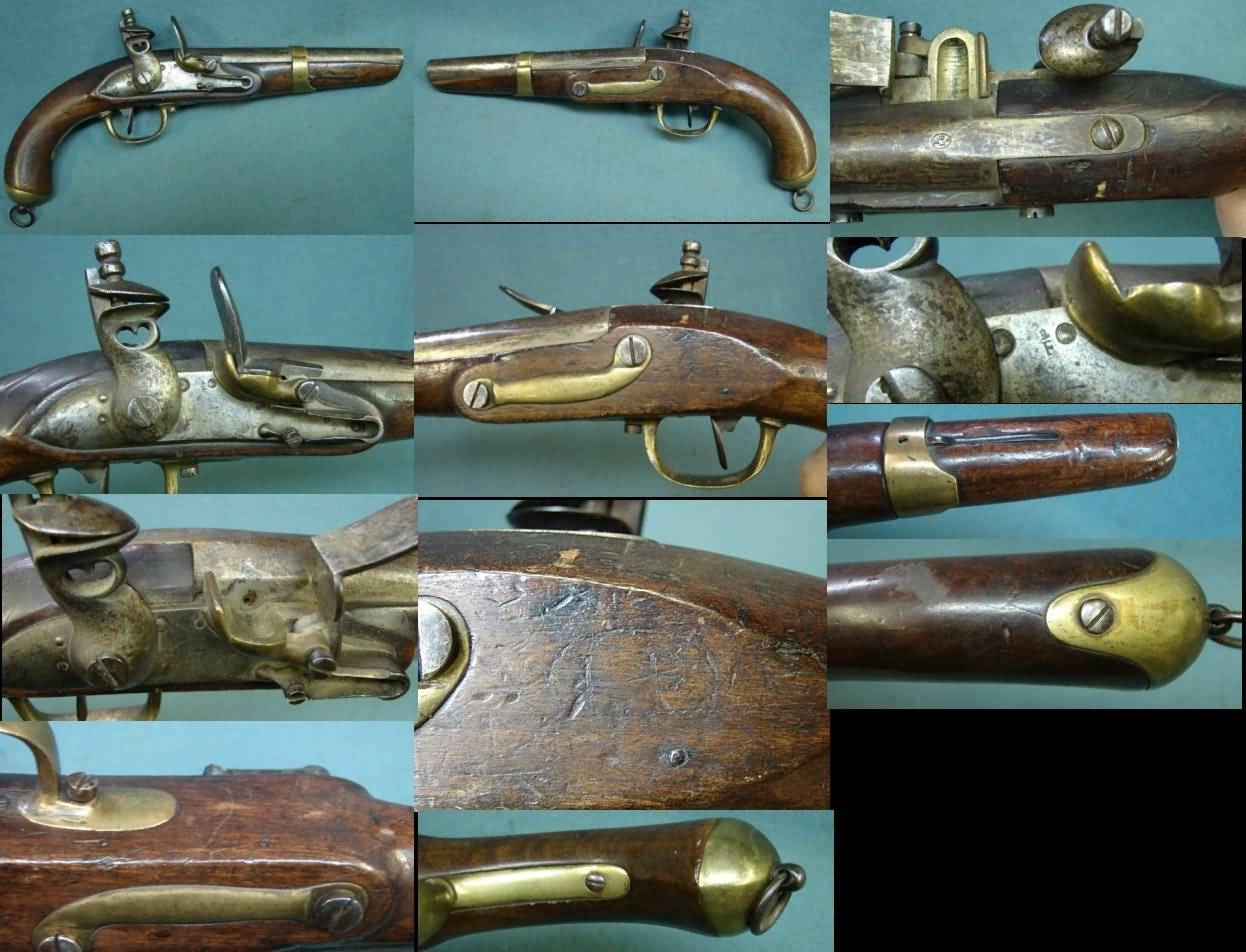
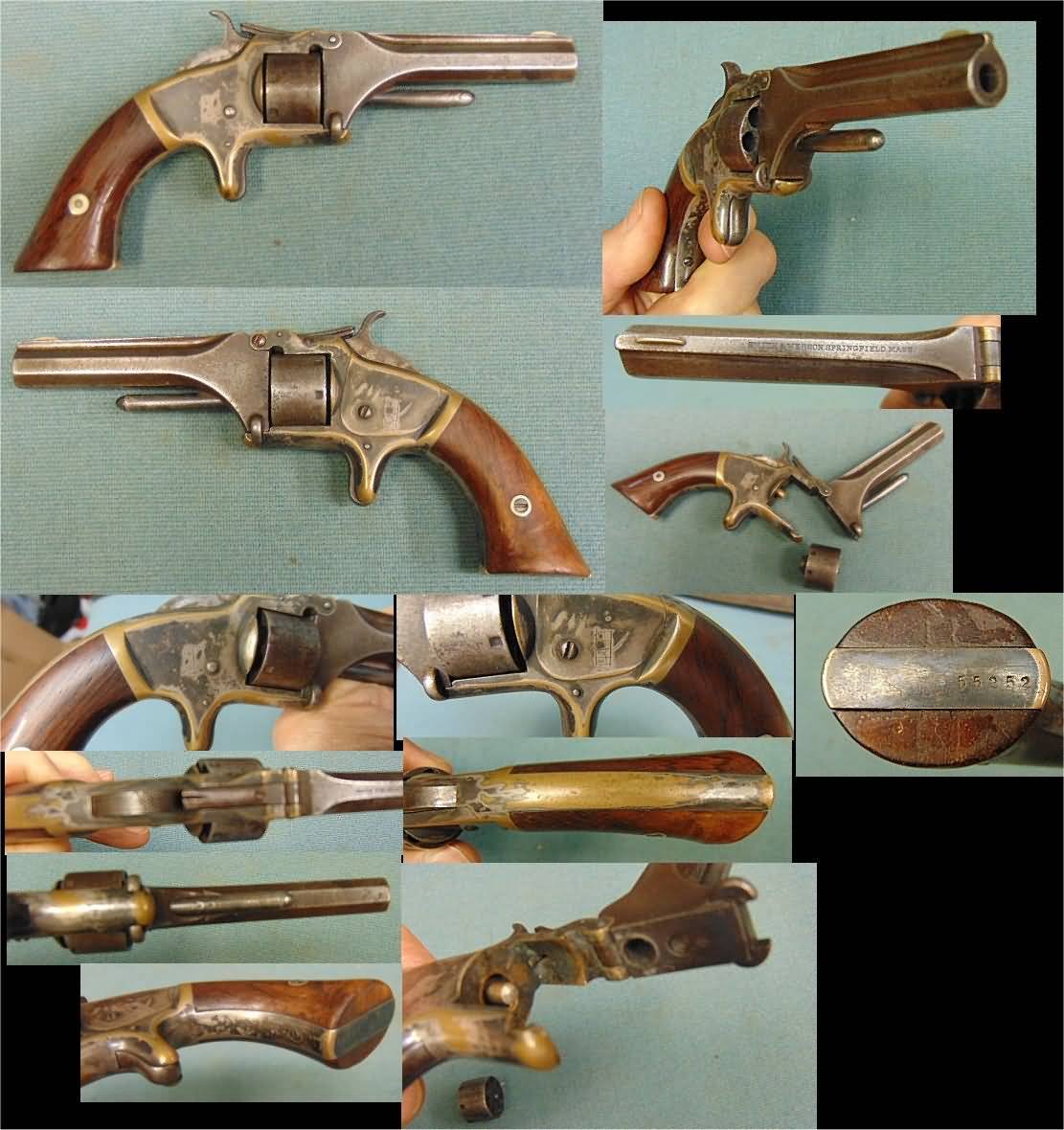
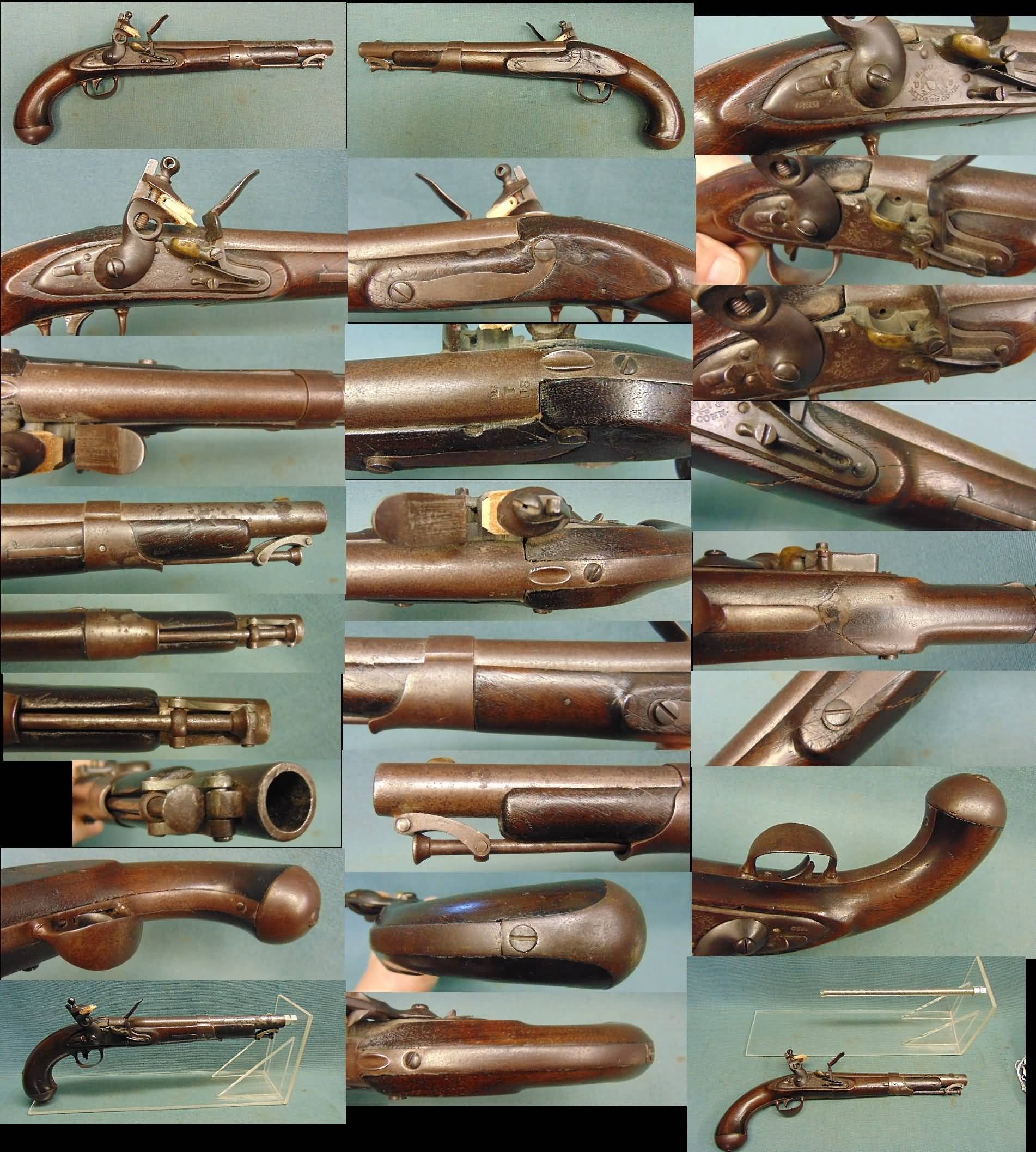
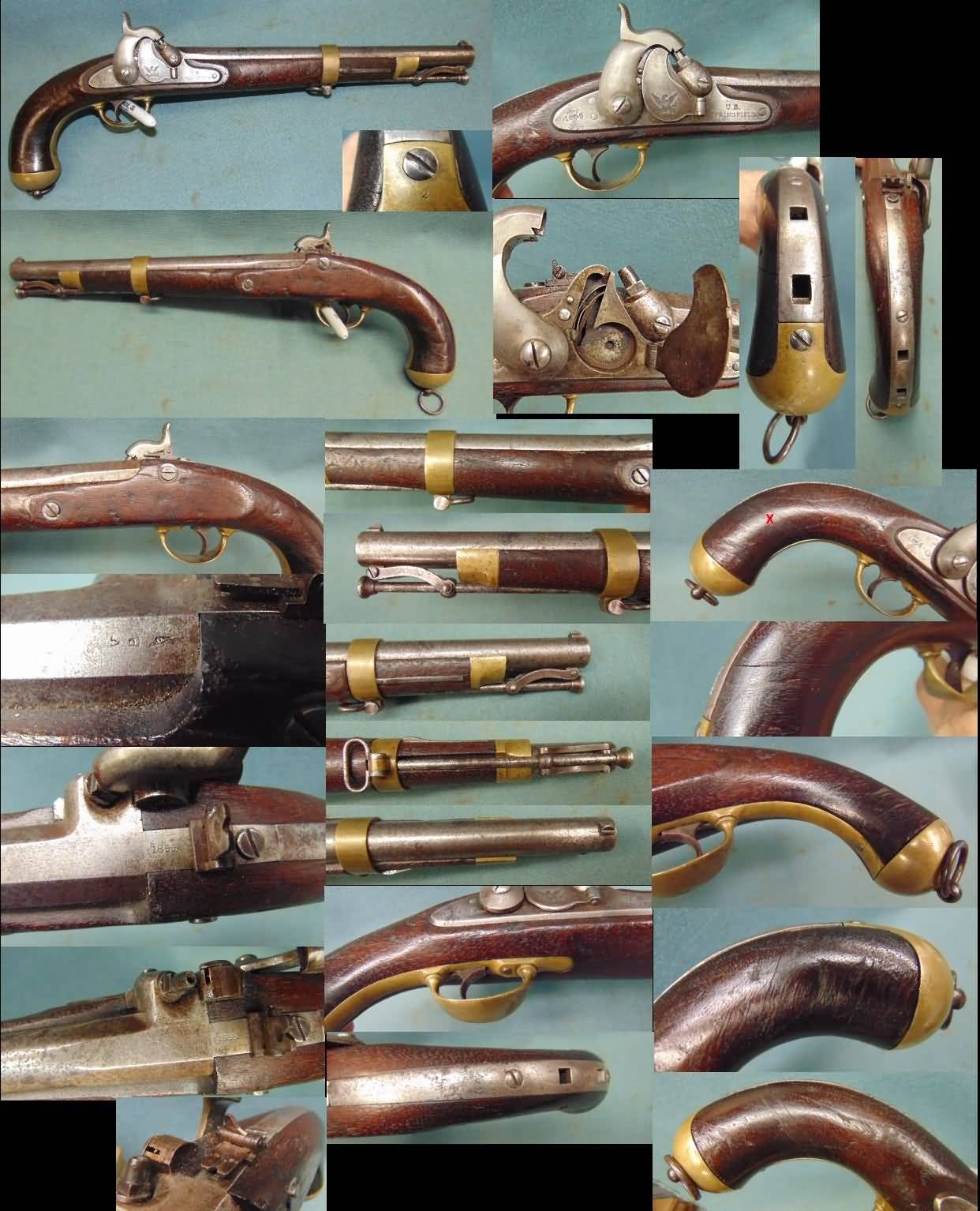
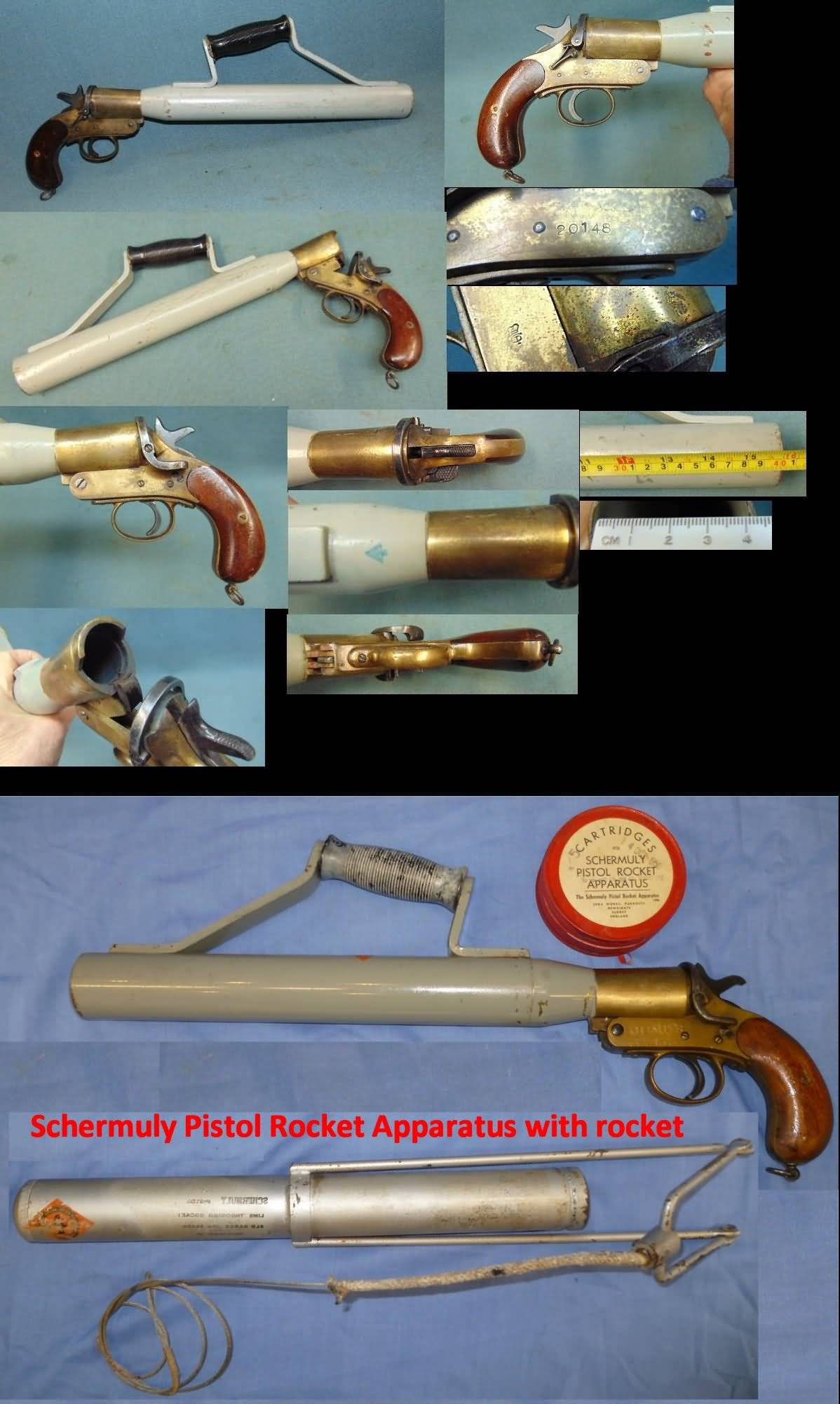
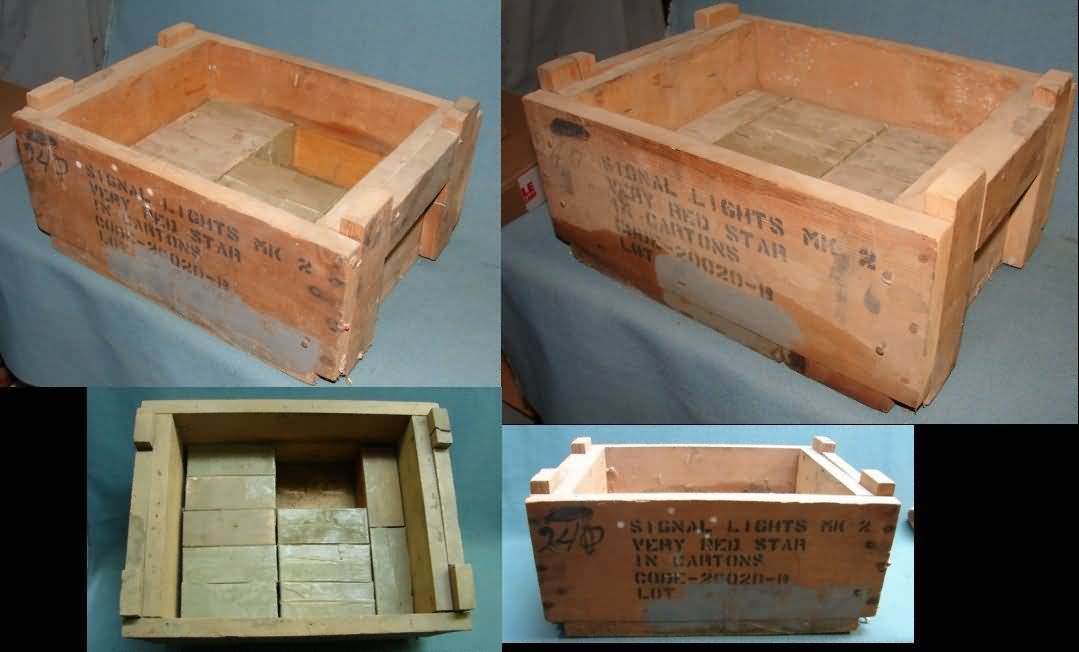
Antique Handguns (pre-1899) or not requiring FFL **NEW ADDITION** 3041 BELGIAN FLINTLOCK MILITARY PISTOL CIRCA 1800-1820- CHEAP! - Belgian proofed 8 inch barrel about .70 caliber. Illegible oval cartouche on left stock flat. Lock has crown over F, and barrel has two crown over LF markings. Excellent bore. Tumbler and sear engagement needs tinkering but they look undamaged. An affordable European Napoleonic era flintlock. ANTIQUE, no FFL needed. $475.00 (View Picture) **NEW ADDITION** 2965 S&W MODEL ONE 2ND ISSUE “TIP UP” .22 SHORT REVOLVER - Serial number 55252, made early in 1865 during the final weeks of the Civil War. About 75,000 of these were made during the War, included among the total 134,000 of all variations made between 1857 and 1883. These were immensely popular as personal purchase items soldiers and civilians. They were the first really popular cartridge revolvers, even though the pipsqueak .22 short was not an optimum defensive caliber. S&W also made similar guns in .38 and .38 rimfire which were popular as officer sidearms, Note that the pin under the barrel is not an axis for rotation, but a fixed post for poking the cases out of the cylinder one at a time. Still, compared to percussion pistols, these were amazing new rapid fire technology, based on Rollin White’s patent for the bored through cylinder to work with rimfire ammunition. Since S&W had purchased White’s patent, they effectively cornered the market until it expired in December 1869. S&W’s purchase cleverly included a requirement that White defend the patent, so he basically went broke litigating against people making copies of the S&W revolvers, or other use of the bored through cylinder, while S&W got rich. Overall this one is fair, well worn condition. Bore is actually pretty decent, but the cylinder and adjacent iron parts are rough, and the cylinder stop does not engage properly. About 25% silver plating remains on the brass frame. The iron parts lack even hints of blue and are mostly just patina mixed with roughness. The left and right sides of the frame have geometric scratches, or maybe even Chinese or Japanese characters? Although chambered for .22 Short, that was weak black powder .22 short, and it is UNSAFE to fire any modern .22 ammunition in these. A good representative example of a historically significant firearm. $195.00 (View Picture) **NEW ADDITION** 2606 U.S. MODEL 1819 .54 CALIBER FLINTLOCK PISTOL BY SIMEON NORTH- ORIGINAL FLINT! - Made in 1822, that is over 200 years ago! This is still in original flintlock configuration, never altered to percussion, so not a “reconversion” like so many. The 10 inch .54 caliber barrel is smoothbore, with oxidized bore, a bit rough but not pitted. Lockplate has sharp S. NORTH over eagle between U and S over MIDLTN CONN dated 1822 at the tail. Lock has dark gray-black case hardened finish mixed with patina. Barrel has inspector initials RJ over P proof mark over US. Robert Johnson, himself a gun maker in Middletown with government rifle contracts was contracted by the government to inspect North’s 1819 contract pistols. Final inspection was by Luther Sage, whose script LS in an oval on the left flat has an unfortunate ding obliterating the initials bu the oval is clear. Overall, this is a good solid example of this important U.S. martial pistol with no real pitting, but the exterior metal surfaces are a mix of dull steel gray and patina some light and smooth and a few heavier spots near the muzzle. All parts appear to original and correct except for the right hand swivel plate for the ramrod is a modern replacement. Hammer has wooden flint with leather pad to simulate the appearance with a flint in place. The back of the hammer has a shoulder which should rest (or be stopped) making contact with the top of the lockplate, but the corner on the plate has been worn to a bevel allowing the hammer to rotate further than it should, so the pistol should not be dry fired, and the hammer lowered carefully by hand. Probably by misbehaving juvenile pirates who should be forced to walk the plank for their careless firearms handling. The Model 1819 included a sliding safety which could be engaged at half cock, the first U.S. martial firearm with a mechanical safety other than just a half cock notch. Now, the bad part, the stock was broken long ago on a diagonal from the front of the trigger guard up through the forward lock screw hole into the barrel channel. It was glue repaired and not perfectly aligned, but while unsightly on the bottom, it looks pretty nice from the sides. A couple of minor age cracks along the grain but not structural. Comes with a clever display stand as shown in the photos. A good respectable example of a key U.S. martial pistol. ANTIQUE- No FFL needed. You don’t find 200 year old pistols in pristine condition any more, and the repaired break also busted the price of this good representative example down to a very affordable $1395.00 (View Picture) 1601 SCARCE U.S. MODEL 1855 SPRNGFIELD ARMORY PISTOL-CARBINE DATED 1855 - (No serial number.) Springfield made millions of rifles over their long history, but only made three pistol models. The first was the Model 1817 single shot .69 caliber flintlock with only about 1,000 cobbled together circa 1818, mostly from unfinished parts first begun about 1807. The third was the Model 1911 .45 automatic with about30,733 made 1914-1917. The second was this Model 1855 single shot percussion pistol-carbine with only about 4,012 made 1855-1857. The 1855 pistol-carbine is a great example of a government project- note very good for its intended purpose, and obsolete by the time it was finished. As part of the innovative Model 1855 arms family which introduced the .58 caliber Minie ball, this had the Maynard tape primer system similar to that on the Rifles and Rifle Muskets. These were intended for issue to mounted troops, as a pair to be carried in pommel holsters for use while mounted. (Thus called “horse pistols” as opposed to “belt pistols to be carried in a belt holster.) The 12 inch barrel weight makes these nearly impossible to hold and aim accurately as a pistol. When fighting dismounted, the detachable shoulder stock was to be installed, with better accuracy but the rear sight for 400 yards was wildly optimistic. (Notches also for 100 and 200 yards and a peep for 300.) One shoulder stock was supplied with each PAIR of pistols, and all were numbered to ensure matching with proper fit. This example is number “2” on the butt cap, and numbers were done in batches from 1 to 20. The .58 caliber Minie ball was a heavy kicker and unpleasant to fire from hand or shoulder. Perhaps they would have been better received if the Colt .44 caliber Dragoon revolvers had not been already widely issued before the 1855 Pistol-Carbines showed up, and after having seen a six shot revolver, the single shot pistol was nearly absurd. Despite the shortcomings for actual warfare use, these are really handsome looking guns, and quite popular with collectors, as some were used in the Civil War, and they mark the end of the single shot non-cartridge pistol in U.S. military use, although some rolling block pistols did see use by the Navy and Army in the 1860s-70s. This example has been in John’s collection for many years but needs a new home. Matching 1855 manufacture dates on lock and barrel. Excellent mechanics, and bore looks near new. Stock has assorted dings and may have been lightly cleaned long ago, with no sign of any wood damage behind the nipple area. The stock is age cracked along the grain near the bottom of the grip, as is the case with just about all of these as the wood shrinks over time but the metal parts do not, creating stress cracks. Exterior iron or steel parts are mostly dull steel gray mixed with scattered patina and fine salt and pepper roughness. This could be cleaned to bright, if yo prefer that look, but most collectors prefer antiques to be uncleaned. The 100/200 yard sight leaf has the left part of the 200 yard leaf broken off, but leaves move easily and most of these have much worse rear sight problems. The often missing sling swivel on the barrel band, and the swivel rammer are both intact and original, often not the case on these. Maynard tape primer door shuts and latches properly, and the feed mechanism inside is complete and functional. While not a mint example this is far above the usual condition of these scarce guns, and a nice example of one of three Springfield made pistols. Note that this is the pistol only, without the carbine stock. Twice as many pistols were made as stocks, and they are about impossible to find loose, and there have been some fakes/replicas made, so be careful if you try to find on. ANTIQUE, no FFL needed. $2995.00 (View Picture) FLARE GUNS & LINE THROWING GUNS FOR COLLECTORS: 7104 BRITISH SCHERMULY ROCKET PISTOL APPARATUS (SRPA) LINE THROWING GUN - Serial number 20148 made circa 1940-1960. This is the “International Number 2” size unit, using 41mm rockets, with 15 7/8” barrel. Made by Schermuly on a brass framed signal (flare) pistol No.1 Mk III* with the addition of a steel barrel and handle. Schermuly made similar devices for three different sizes of rockets, 30mm, 41mm or 50mm diameter, although all used the same 1 inch (25mm) “ignition-ipulse” cartridges. The rocket has a “U” shaped wire frame attached to it, hinged to allow it to hang down below the gun before firing. A short wire leader is attached to the U-frame and the “shot line” is attached to the wire, keeping it far enough from the rocket exhaust to avoid being burned. The rocket is inserted into the barrel, and a “impulse-ignition cartridge” is inserted into the breech of the gun. When fired, the flash from the cartridge ignites the rocket motor which then travels up to 250 yards. Expanding gases from the ignition cartridge also help expel the rocket from the gun. When the rocket reaches the shore, or the vessel in distress, the light weight shot line is used to haul over a larger line to carry out rescue operation. For more information on William Schermuly and all other types of line throwing guns, see my article in the Bulletin of the American Society of Arms Collectors at https://americansocietyofarmscollectors.org/wp-content/uploads/2021/01/2015-B111-Line-Throwing-Guns.pdf Overall fine condition, although bore is dirty, and some scrapes on the barrel paint. Breech end of the barrel has British Broad Arrow property marking ink stamped, so this was likely used by the Royal Navy or RNLI, probably circa WW2 to 1970s. Technically this is not a “firearm” and no FFL is needed. Upper photos show the gun for sale; lower photo shows a different gun with a rocket so you can see what they look like. NO FFL required. $575.00 (View Picture) 21712 FLARE GUNS & SIGNAL PISTOLS: THEIR USE, DESCRIPTION AND ACCESSORIES - By Robert M. Gaynor, 178 pages 8.5” x 11” soft covers. This book is the best single reference on this subject for collectors today. In fact, except for brief passage in obscure manuals, or discussion of a gun or two the scope of a more general work there is nothing conveniently available on this subject. Given the number of people who collect flare guns it is amazing that there is not more written on the subject. At this point, flare guns are still mostly modestly priced, and remain an attractive collecting field with few regulations and a good variety of items. Some 96 different Flare or Signal pistols are covered, with dimensions and some historical background and information on maker and the intended use. This is on the same page as a good sketch of the item. There is not much information on total numbers made or other indication of relative rarity, but it is a good starting point for further research. The drawing allow you easily identify your gun with the one in the book. There is a drawing and info for each of 37 U.S. flare and signal guns, ranging from Civil War Army and Navy models up to late 20th century commercial products. He also covers 11 British or Canadian designs, 9 French, 17 German, 4 Italian, 3 Japanese, 6 Russian/Eastern European designs, and 9 from other countries. Besides the guns Gaynor covers 29 holster or carrying kits, and 19 different types of cartridges, along with a 10 page table with more detailed info on cartridges. An excellent bibliography and good index complete this book. This is a very useful and accurately researched book on this specialized topic, which we use every time we encounter any flare or signal gun, and one that anyone interested in Flare or Signal guns needs in their library. OUT OF STOCK- OUT OF PRINT- LOOK ON USED BOOK LISTS- WORTH THE SEARCH! 9485 WW2 VINTAGE WOOD SHIPPING CRATE FOR 10 GAUGE RED VERY SIGNALS - This originally had 24 boxes of 10 rounds each, but is now empty. (ten boxes are shown in place to illustrate the proper packing layout, but are NOT included). Stenciled on both sides:
SIGNAL KIGHTS MK 2
VERY RED STAR
IN CARTONS
CODE- 20020-B
LOT- [number painted over]/
Just the thing to spice up your flare gun collection. Overall excellent condition. No lid. Other than the 10 boxes of ammo inside, what you see is what you get. $40.00 (View Picture) Note- Please check
all our catalog pages
|
||||||||||||||||||